L&D Digital Upskilling Programme.
Designed and facilitated a comprehensive blended learning programme to upskill the British Red Cross L&D team in digital learning design, building internal capability in instructional design methodology, authoring tools, and modern adult learning practice.
independently published
eLearning post-
programme

The Challenge.
The British Red Cross L&D team faced a dual challenge: upskilling existing staff with contemporary digital learning design competencies while simultaneously building a structured, effective onboarding pathway for new colleagues. A recognised gap existed in foundational instructional design knowledge, adult learning theory, and authoring tool proficiency, compounded by a diverse range of prior experience levels across the team.
Diverse Experience Levels
The target audience ranged from complete novices to practitioners with some existing digital skills. A rigid, one-size approach would fail both ends of the spectrum, requiring a flexible, differentiated design.
Dual Purpose
The programme had to function both as a capability-building curriculum for existing staff and as a structured onboarding pathway for new joiners, requiring a coherent design that served both audiences.

Methodology.
A blended learning strategy was designed to accommodate diverse experience levels and learning preferences, combining face-to-face workshops, virtual instructor-led sessions, self-paced eLearning, and collaborative peer learning throughout.
- Step 01
Foundational Workshops (F2F)
Interactive in-person sessions established core instructional design concepts, including ADDIE, SAM, Bloom's Taxonomy, and Gagne's Nine Events, creating a shared conceptual foundation.
- Step 02
Virtual ILT (vILT)
Live online sessions reinforced concepts, enabled real-time Q&A, and facilitated cohort discussion, bridging the gap between theory and practical application.
- Step 03
Self-Paced eLearning
Modules developed in Rise 360 and Storyline 360 allowed participants to explore tool proficiency and deepen understanding at their own pace, including animation with Vyond.
- Step 04
Practical Capstone Project
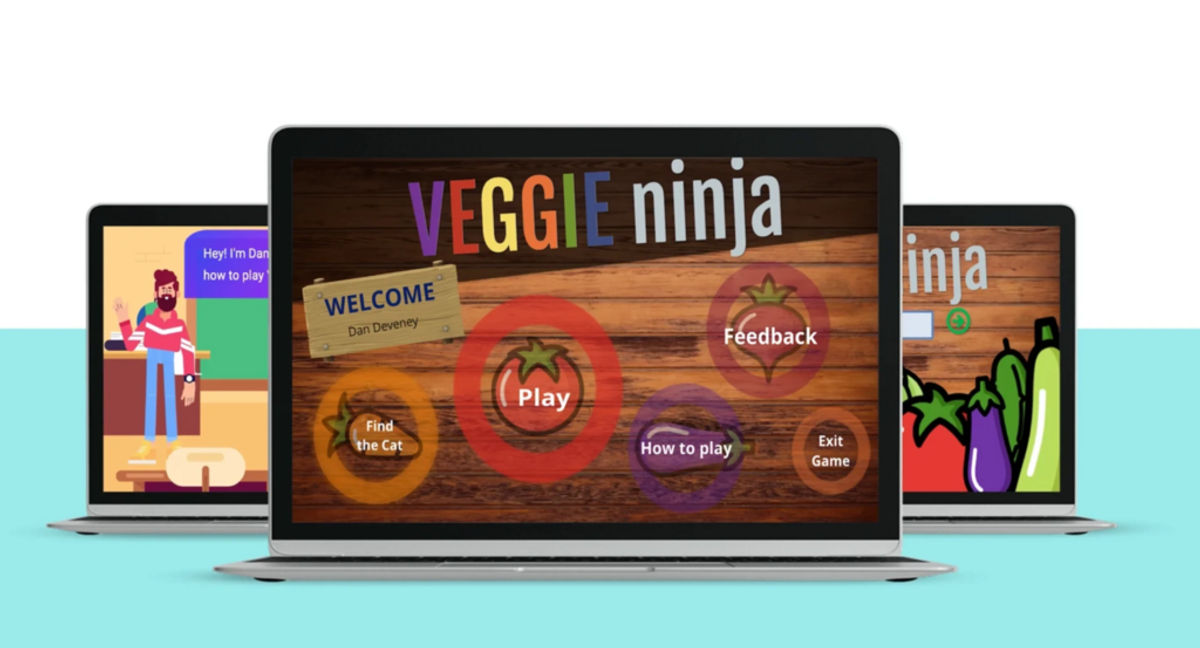
Participants applied their learning by designing and building a gamified activity, 'Veggie Ninja', providing tangible, assessable evidence of skill acquisition across the full programme.

The Approach.
The programme was designed to build not just individual skill but collective capability. Peer learning, collaborative forums, and a shared capstone project created a stronger, more connected L&D community with a shared language and practice.
- Community of Practice
LMS forums and discussion boards were integrated to encourage ongoing peer-to-peer learning, knowledge sharing, and support across cohorts beyond structured sessions.
- Data-Driven Monitoring
LMS analytics were used to track engagement, progress, and assessment performance, providing real-time data to inform programme adjustments and evaluate effectiveness.
- Gamified Capstone
The Veggie Ninja project proved exceptionally effective: consolidating all programme learning in a single, engaging, practical artefact that demonstrated both design skill and creative application.
- Flexible Pathways
Multiple learning formats catered to participants' varied schedules, experience levels, and preferred modes of engagement, maximising accessibility across the whole team.

The Impact.
Every participant independently published eLearning content by the end of the programme. Internal digital learning output tripled per quarter post-launch, while spend on external development agencies fell by 41%. The average competency assessment score across the core tool set reached 87%, and the programme achieved a satisfaction rating of 4.6 out of 5.