Allergen Awareness.
End-to-end design and development of a regulatory-endorsed allergen awareness programme for a national leisure operator, achieving a 40% improvement in audit scores and 95% learner approval within six months of launch.
audit scores
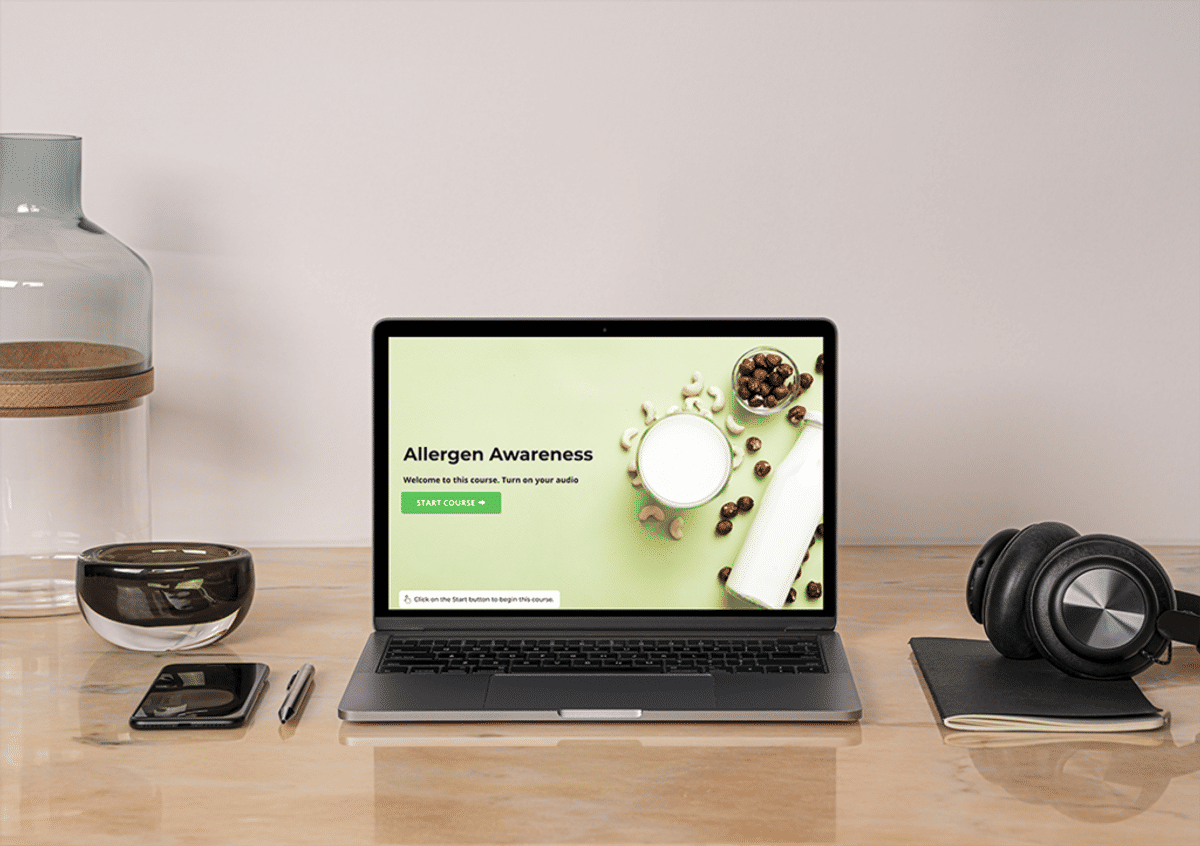

The Challenge.
A significant change in UK food allergen legislation (Natasha's Law) required a large leisure business with a complex franchised network to standardise compliance training across the entire organisation. Existing provision was inconsistent, paper-based, and ill-equipped for the new legal requirements. Critically, the training required formal endorsement from Local Authorities before it could be deployed.
Regulatory Compliance
Training had to meet the specific endorsement criteria of multiple Local Authorities, requiring early regulator engagement to ensure compliance from design stage.
Franchise Complexity
Standardising training across a network of in-house and franchised outlets, each with varying operational practices, demanded both a consistent core design and a robust change management strategy.

Methodology.
The ADDIE model structured a rigorous end-to-end development process, from legislative analysis through to post-launch evaluation. Learning design prioritised real-world behaviour change over information delivery.
- Step 01
Analysis
Conducted a thorough review of Natasha's Law, existing company procedures, and the varied needs of different staff roles, consulting food safety and legal subject matter experts throughout.
- Step 02
Design
A modular, five-part eLearning experience was designed to guide learners from foundational knowledge to practical application, blending scenario-based learning, decision-making interactions, and gamification.
- Step 03
AI Integration
An AI-powered avatar (Synthesia) and AI voice-over (ElevenLabs) were integrated to create a personalised virtual coaching experience, reducing production cost and time against traditional video.
- Step 04
Regulatory Alignment
Local Authorities were consulted early, shaping content to meet endorsement expectations at source and avoiding costly rework in later stages.

The Approach.
Impact mapping drove the entire design process. Starting from the desired real-world outcomes, including improved audits and accurate record-keeping, each instructional decision was made in service of measurable on-the-job behaviour change.
- Interactive Scenarios
Learners navigated realistic customer interactions and kitchen scenarios, making critical decisions on allergen management in a safe, consequence-free environment.
- Gamified Assessments
Module quizzes were structured as knowledge checks with a scoring system. The final assessment was locked until all modules were completed, ensuring a comprehensive learning path.
- Franchise Communication
A structured communication and change management strategy supported franchise managers through the rollout, fostering buy-in and ensuring consistent implementation across the network.
- Early Endorsement Strategy
Regulator engagement at design stage, rather than post-development review, was the single most important factor in achieving full Local Authority endorsement without rework.

The Impact.
The programme achieved full Local Authority endorsement and was deployed within six weeks of initial analysis. Allergen audit scores improved by 40% within six months, 92% of learners passed the final assessment on first attempt, and a 95% satisfaction rating confirmed the design landed effectively across a diverse, franchise-wide workforce.