Alcohol and Drug Awareness.
A complete rebuild of Places for People's outdated Alcohol and Drug Awareness course. Redesigned around microlearning principles and social learning, the new course achieved 93% completion rates and drove genuine awareness shift, with 17,000+ employees engaging in peer reflection through anonymous feedback mechanisms.
rate

The Challenge.
The original Alcohol and Drug Awareness course was failing. Low completion rates, outdated content, and no meaningful engagement. A sensitive topic delivered poorly is worse than not delivering it at all. The challenge was rebuilding from scratch for a busy, time-poor workforce whilst making the topic feel relevant rather than punitive.
Making Compliance Completable
Compliance training is often skipped. A 15-minute microlearning course needed to feel respectful of time without sacrificing depth on a sensitive topic.
Honest Conversation on Difficult Topics
Forcing peer discussion on alcohol and drug awareness in a classroom feels unsafe. The design had to enable honest reflection without social pressure.

Methodology.
The rebuild used three core strategies: ruthless microlearning sequencing (every section earned its place), scenario-based video content grounded in workplace reality, and anonymous social learning via MS Forms. SCORM tracking at key stages provided quantitative data; Forms feedback provided qualitative insight. Together, these created both engagement and measurable outcomes.
- Step 01
Microlearning Sequencing
Every section timed and trimmed. Nothing that does not need to be there.
- Step 02
Scenario-Based Content
Video assets built to feel relatable and workplace-relevant, not generic compliance footage.
- Step 03
Anonymous Social Learning
MS Forms enabled honest peer reflection without the awkwardness of forced group discussion.
- Step 04
Dual Tracking
SCORM data captured completion and drop-off points. Forms data captured perception shift and awareness change.

The Approach.
The course opened with relatable scenarios, moved through knowledge checks and interactive blocks, then extended learning through reflection prompts designed for peer conversation. Learners completed the course in under 15 minutes. They then had the option to engage with anonymous feedback forms, creating a space for honest dialogue on a sensitive topic without social risk.
- Scenario-First Learning
Opened with workplace-relevant situations before delivering policy or theory.
- Active Throughout
Knowledge checks and interactive blocks kept learners engaged rather than passive.
- Safe Reflection
Anonymous forms enabled honest feedback and peer discussion without pressure or oversight.

The Impact.
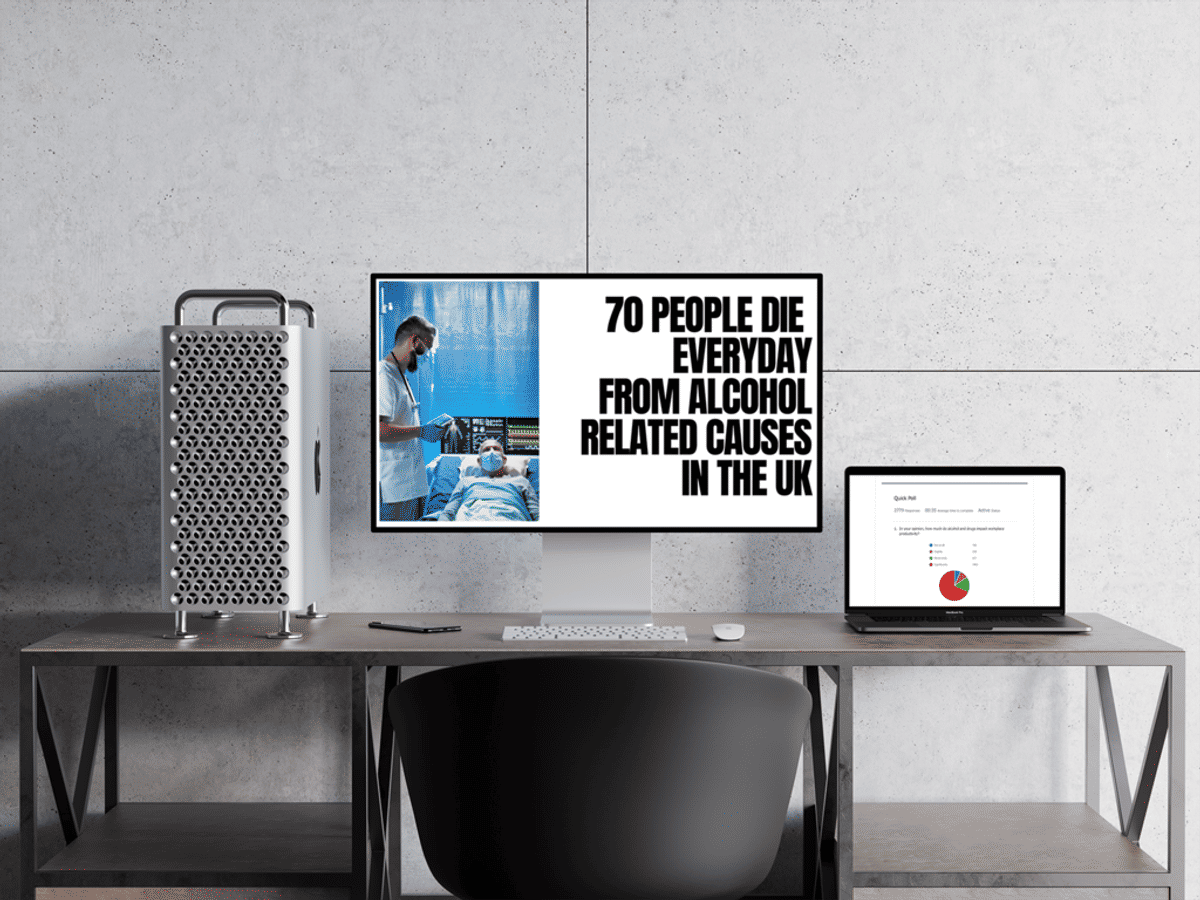
The redesigned course delivered exceptional completion rates and genuine awareness shift. A 93% completion rate significantly outperforms typical compliance training. More importantly, 17,000+ employees engaged with the social learning component, indicating the course felt safe enough for honest reflection. The data revealed that 67.5% of respondents now recognise alcohol's significant impact on workplace activity, showing the course shifted not just knowledge but perception and awareness.