

"By addressing the identified gaps, leveraging emerging trends, and overcoming obstacles to development, we can better support the organisation's learning and development needs."
One of my core values is ensuring people have the skills and knowledge to thrive in the ever-evolving landscape of workplace learning.
To that end, I recently conducted a learning needs analysis (LNA) across our Talent and Development (T&D) function, encompassing various teams with diverse expertise. This analysis aimed to identify our strengths, pinpoint areas for improvement, and understand the learning preferences and obstacles that affect our team's development.
The LNA Process
Before diving into the findings, I want to shed light on the process I followed to conduct this comprehensive analysis:
- Planning and Design: I started by defining the scope of the analysis, identifying the key stakeholders, and determining the data collection methods. I opted for a mixed-methods approach, combining quantitative data from a survey with qualitative insights from open-ended questions and team discussion.
- Data Collection: I developed a survey using Microsoft Forms, covering various skill areas relevant to our T&D function, including core L&D knowledge, practical skills, digital learning, business partnering, and emerging technologies. The survey was distributed to 24 individuals across different teams, achieving a 70.8% response rate.
- Data Analysis: I analysed the quantitative data by calculating average scores for each skill area, identifying areas of strength and weakness.
- Reporting and Recommendations: I compiled the findings into a comprehensive report, highlighting key trends, skill gaps, and learning preferences.
- Implementation and Evaluation: The next step involves working with team leaders and stakeholders to implement the recommendations.
70.8% Survey Response Rate
of 24 surveyed practitioners across different teams returned high-fidelity response data.
Key Findings: Strengths & Opportunities
The analysis revealed a range of insights that will inform our L&D strategy moving forward:
Strengths:
- Business Partnering: Most teams demonstrated strong skills in understanding business needs, aligning L&D solutions, and building relationships with stakeholders.
- Practical L&D Skills: The L&D team excelled in designing training curricula, developing materials, and facilitating sessions.
- Leadership and Management Development: The Flight Path team showed significant strength in designing and facilitating leadership programs.
Areas for Improvement:
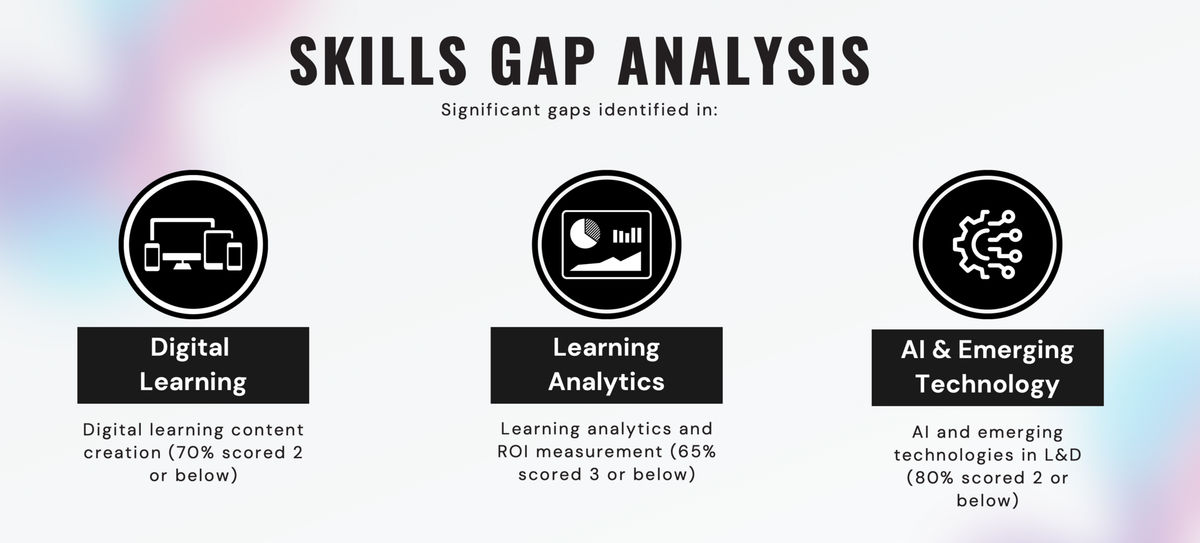
- Digital Learning and LMS Skills: Most teams need to improve their skills in creating engaging eLearning content and advanced LMS management.
- L&D Theory and Core Knowledge: Several teams would benefit from strengthening their understanding of learning theories and adult learning principles.
- Data Analysis and ROI Measurement: Across all teams, there's a need to improve skills in analysing learning analytics and measuring training effectiveness.
Emerging Trends, Learning Preferences & Obstacles
Our teams are looking toward the future while navigating day-to-day challenges:
Emerging Trends:
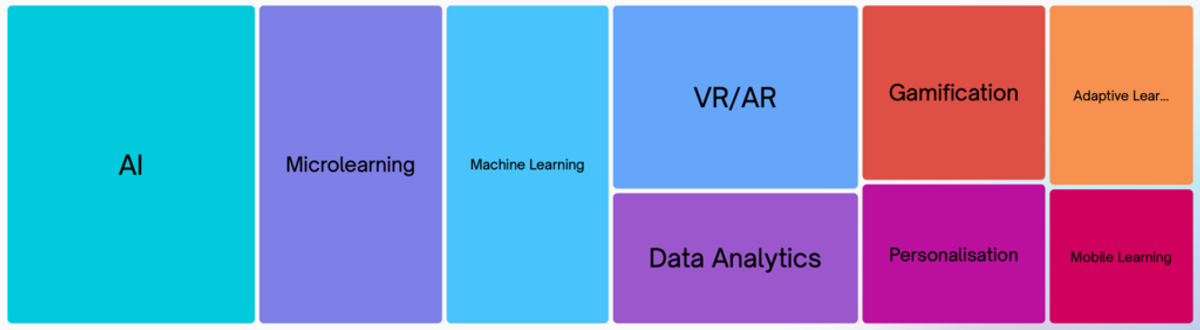
- Artificial Intelligence (AI) in L&D: Strong interest in AI-powered personalised learning, chatbots for learner support, and AI-assisted content creation.
- Data Analytics and Learning Measurement: Focus on ROI measurement, predictive analytics, and data-driven decision-making.
- Virtual and Augmented Reality (VR/AR): Growing interest in immersive learning experiences and simulation-based training.
Learning Preferences:
- On-the-Job Training (OJT): The most preferred method across teams, highlighting the importance of practical, hands-on learning.
- Blended Learning Approaches: Strong preference for a mix of learning modalities.
- Workshops: Remain popular for topics that benefit from group discussion and interactive exercises.
Obstacles to Development:
- Time Constraints & Workload: Consistently cited across all teams as the primary obstacle to skill development.
- Limited Access to Resources: This includes both learning materials and technology tools.
OJT Primary Preference
On-the-job training emerged as the single most requested professional development modality.
Strategic Recommendations
Based on these findings, I've outlined several recommendations to address the identified gaps and enhance our T&D function:
- Digital Learning Initiative: Launch a comprehensive program to improve digital learning and LMS skills, invest in eLearning authoring tools, and develop internal certifications.
- Data-Driven L&D: Implement a team initiative on learning analytics and ROI measurement, provide training on data analysis tools.
- Emerging Technologies Integration: Create an "AI in L&D" task force to explore and pilot AI applications, develop a roadmap for integrating VR/AR.
- Blended Learning Approach: Design learning pathways that combine OJT, workshops, and online learning.
- Time for Learning: Establish protected learning time, integrate microlearning opportunities into daily workflows.
This LNA has provided a roadmap for enhancing the skills and knowledge of our T&D team. By addressing the identified gaps, leveraging emerging trends, and overcoming obstacles to development, we can better support the organisation's learning and development needs.