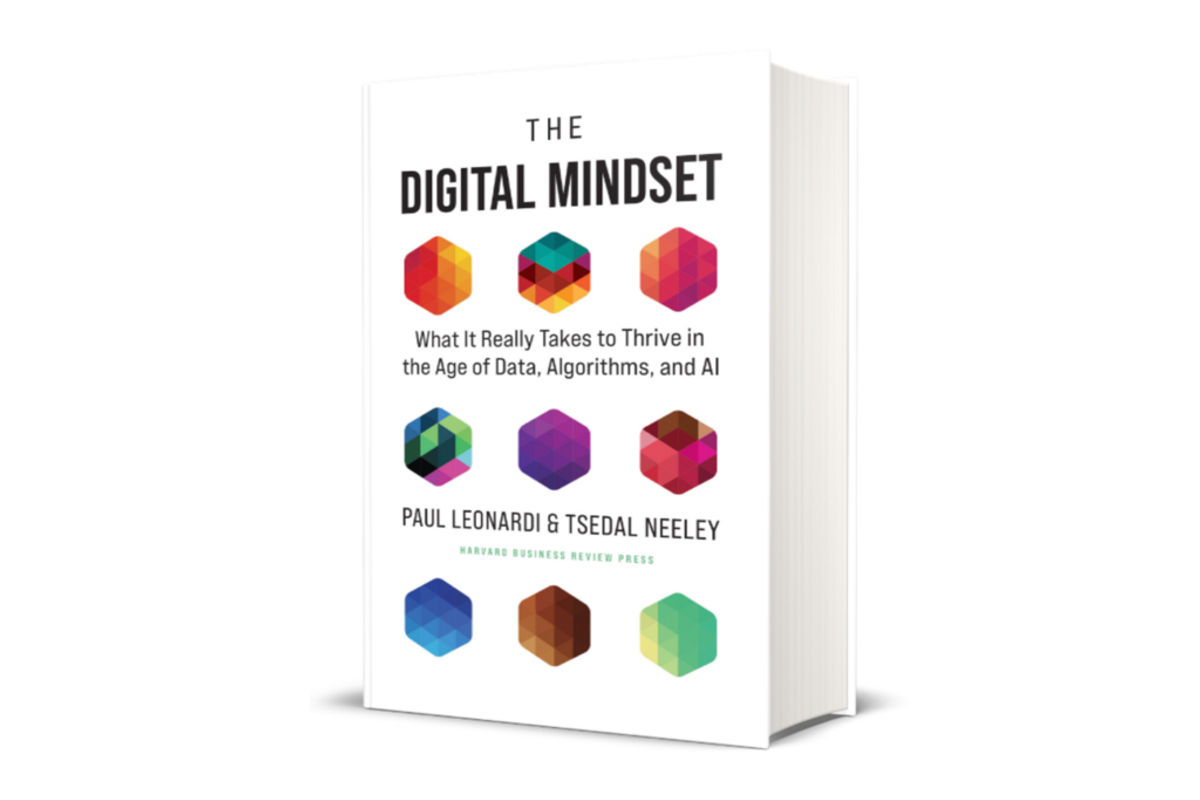

"Ultimately, Digital Mindset is a call to action for educators and learning professionals. It's a reminder that we need to move beyond simply teaching digital skills and focus on developing the mindset that allows individuals to thrive."
Recently, I delved into "Digital Mindset: What It Really Takes to Thrive in the Age of Technology" by Paul Leonardi and Tsedal Neeley, and it's given me a lot to chew on, particularly regarding how we approach learning in today's rapidly evolving digital landscape.
I'm always on the lookout for frameworks and ideas that help us create more impactful and engaging learning experiences. Cultivating a digital mindset isn't just about knowing how to use the latest software—it's about cultivating a set of beliefs and practices that allow us to thrive in a technology-driven world.
Curiosity: The Engine of Learning
The authors emphasize the importance of continuous learning and a thirst for knowledge. This struck a chord. In our field, if we're not constantly exploring new technologies, pedagogical approaches, and understanding the evolving needs of our learners, we risk becoming obsolete.
"Digital Mindset" reminded me that fostering curiosity isn't just about providing information; it's about creating learning environments that encourage exploration, questioning, and a genuine desire to learn. We need to ask ourselves: Are we designing learning experiences that spark curiosity, or are we simply delivering content?

30% Digital Literacy Rule
According to Leonardi & Neeley, you need a minimum of 30% digital literacy to build a functional digital mindset.
Iteration: Embracing the Messy Process of Learning
The iterative nature of a digital mindset also resonated. Learning, like design, is rarely a linear process. It's about prototyping, testing, failing, and learning from those failures.
The book highlights how a digital mindset encourages experimentation and adaptation. This is something I strive for in my work. I've found that embracing a "fail fast, learn faster" mentality, and building in feedback loops throughout the learning process is crucial. It's not about perfection from the outset, but about continuous improvement based on data and user feedback.

Data-Informed: Making Learning More Than a Gut Feeling
The emphasis on being data-informed is another key takeaway. In the digital age, we have access to a wealth of data about how learners interact with our materials.
"Digital Mindset" reinforces the importance of using this data to inform our design decisions. It's not just about tracking completion rates; it's about understanding learner behaviour, identifying areas of difficulty, and using that information to refine and personalise the learning experience.

A/B Test Data Over Intuition
Replacing gut feeling with systematic visual analytics to continuously optimise learner journeys.
Reflection and Application
Reading "Digital Mindset" has prompted me to reflect on my own practice as an LXD. Am I truly fostering curiosity in my learners? Am I embracing iteration and using data effectively? The book has provided a valuable framework for thinking about how we can design learning experiences that not only teach specific skills but also cultivate a digital mindset in our learners.
Ultimately, "Digital Mindset" is a call to action for educators and learning professionals. It's a reminder that we need to move beyond simply teaching digital skills and focus on developing the mindset that allows individuals to thrive in a rapidly changing world.